
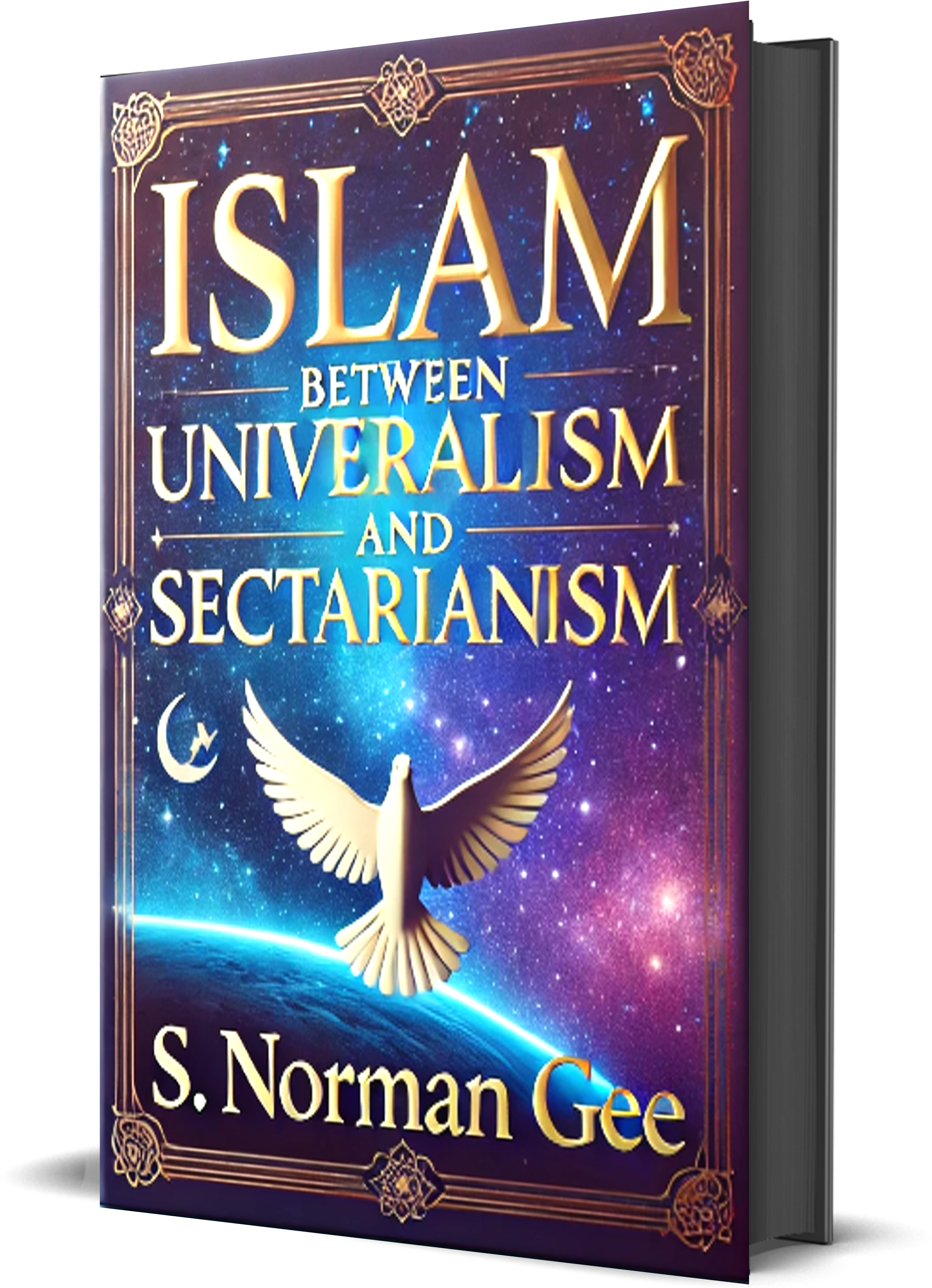

Islam Between Universalism and Sectarianism!
Price range: $6.99 through $19.99
The Prophet’s model represented Islam’s universal mission, with the divine intention of establishing an indivisible faith. His leadership sought to transcend differences, emphasizing the oneness of God, unity within the Ummah, and a divinely appointed lineage to safeguard the faith. However, the subsequent era introduced sectarianism, marking a departure from the initial model. Leadership shifted from a unified, celestial mission to a system characterized by political maneuvering, resulting in diverse interpretations, sects, and ultimately a fractured Islamic identity.
This thesis has highlighted the effects of each era on the integrity of Islam as a celestial message. The Prophet’s model emphasized universal values of guidance and unity, while the actions following his death introduced a political dimension, fragmenting the Ummah. Today, the challenge remains to reconcile Islam’s universal principles with the sectarian divisions rooted in this historic divergence.
Islam, as established by the Prophet Muhammad, represented a unified, universal message centered on the oneness of God, the prophecy, and the Imamate—culminating in a divine framework intended to guide humanity toward unity, justice, and spiritual fulfillment. During the Prophet’s lifetime, his leadership reflected a celestial mandate that emphasized inclusivity, divine guidance, and a familial bond within the Ummah. The message was guided through a clear lineage, with the Prophet appointing Imam Ali at Ghadir Khumm, establishing a universal Islamic governance model rooted in purity and divine knowledge.
However, the period following the Prophet’s passing marks a distinct shift from this original vision, as the early companions, led by figures such as Abu Bakr and Umar, instituted policies and practices that diverged from the Prophet’s directives. These leaders moved to consolidate authority through human-led decision-making models, prioritizing centralization, allegiance, and political control, as seen in the Saqifah assembly, where allegiance was solidified through forceful means and alternative models of succession were introduced. The actions taken against Ahl al-Bayt—including the seizure of Fadak, the attack on Fatimah’s house, and the emphasis on the sufficiency of the Quran over the Sunnah—underscored the stark transition from a divinely led to a human-centered authority, reflecting the rise of sectarianism.
| Types |
Digital Book ,Hard Cover ,Paper Cover |
|---|
Related products

Companionship in the Quran?!
Price range: $9.99 through $39.99
Ruminating The Past Corrupts Reflection!
Price range: $39.99 through $42.52
Truth of Certainty
Price range: $6.99 through $19.99
Truth of Certainty
Price range: $6.99 through $19.99
Truth of certainty eye of certainty Knowledge of certainty Chapter 2
Price range: $9.99 through $24.99








Reviews
There are no reviews yet.